Buy brain-hack.com ?
We are moving the project
brain-hack.com .
Are you interested in purchasing the domain
brain-hack.com ?
domain@kv-gmbh.de · 0541-91531010
Buy brain-hack.com ?
What is the difference between negotiating subject and negotiating basis?
Negotiating subject refers to the specific issue or topic that is being discussed or resolved during a negotiation, such as price, terms, or delivery schedule. On the other hand, negotiating basis refers to the underlying principles, values, or criteria that guide the negotiation process, such as fairness, mutual benefit, or trust. While the negotiating subject is the tangible aspect of the negotiation, the negotiating basis is the intangible foundation that shapes how the negotiation is conducted and the ultimate outcome. It is important for negotiators to align both the subject and basis in order to reach a successful agreement. **
'For negotiating or for debating?'
For negotiating, it is important to focus on finding common ground and reaching a mutually beneficial agreement. This involves active listening, understanding the other party's perspective, and being open to compromise. On the other hand, for debating, the goal is often to persuade others to your point of view through presenting strong arguments and evidence. This may involve more assertive communication and a focus on winning the argument rather than finding a compromise. Both negotiating and debating require effective communication skills, but the approach and goals are different. **


Similar search terms for Negotiating
Top-Angebote
Products related to Negotiating:
-
MACMILLAN How Emotions Are Made – The Secret Life of the Brain by Lisa Feldman Barrett Neuroscience & Psychology BestsellerDiscover a groundbreaking new understanding of the human mind with How Emotions Are Made: The Secret Life of the Brain by Lisa Feldman Barrett. Challenging long-held beliefs about how emotions work, neuroscientist Lisa Feldman Barrett presents a revolutionary theory explaining that emotions are not universal reactions, but are actively constructed by the brain. Drawing on cutting-edge research in psychology and neuroscience, the book reveals how the brain predicts, interprets, and shapes our emotional experiences. Written in an accessible and engaging style, this bestseller reshapes how we think about feelings, decision-making, mental health, and human behavior. It’s essential reading for anyone interested in psychology, neuroscience, self-understanding, and emotional intelligence. Why Readers Love This Book: Revolutionary insights into how emotions are created Based on modern neuroscience research Accessible explanations for general readers Practical implications for mental well-being Ideal for psychology and science enthusiasts A thought-provoking exploration of the brain, How Emotions Are Made changes how we understand what it means to feel.3,99 £*Shipping: 1,99 £Secure redirect to the provider
-
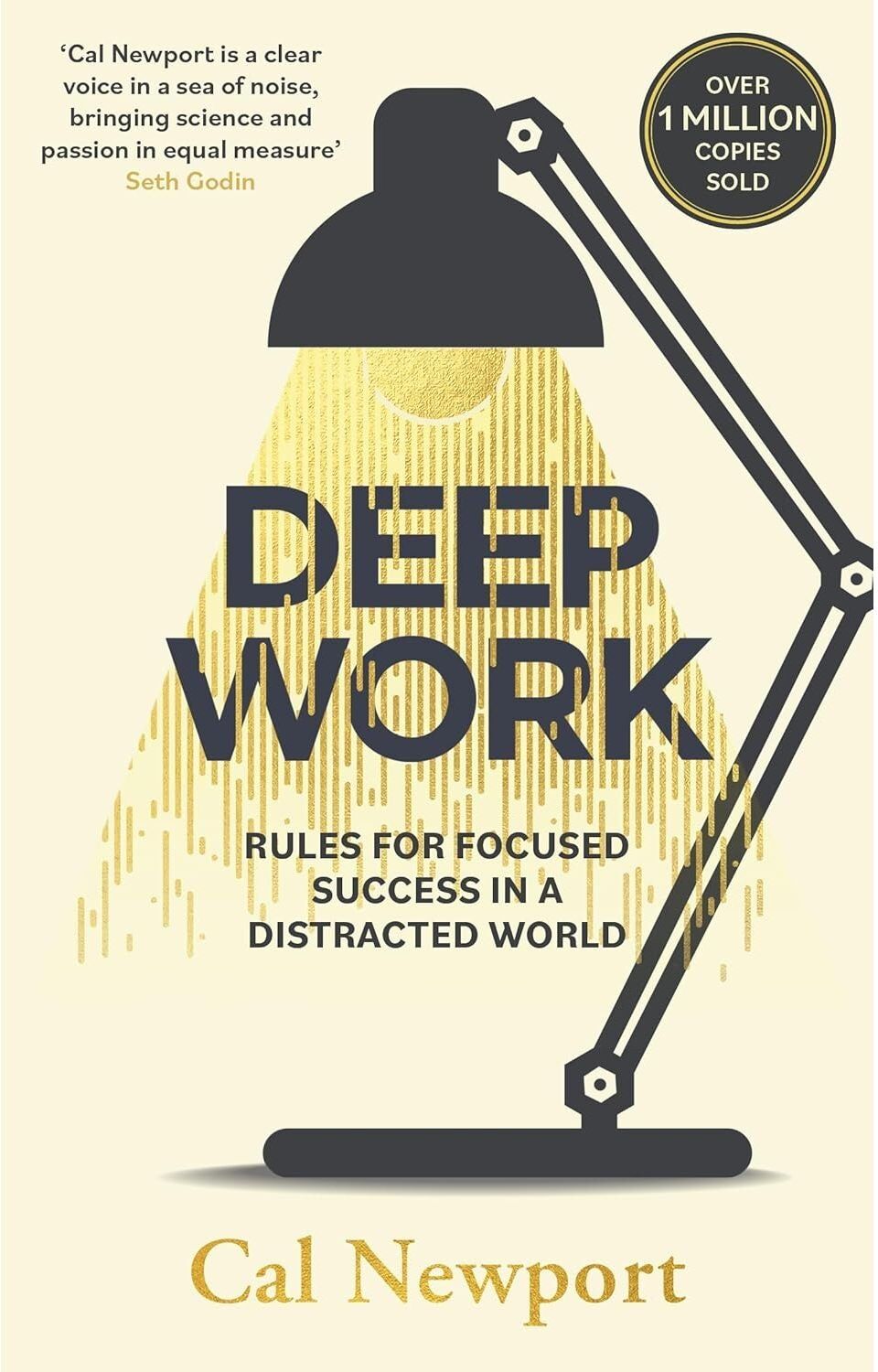
Piatkus Deep Work – Rules for Focused Success in a Distracted World by Cal Newport Productivity, Focus & Career Success BookIn a world full of distractions, the ability to focus deeply is becoming increasingly rare—and increasingly valuable. In Deep Work: Rules for Focused Success in a Distracted World, bestselling author and productivity expert Cal Newport explains why deep, concentrated work is the key to mastering complex skills, producing high-quality results, and standing out in your career. Drawing on neuroscience, psychology, and real-world examples, Newport shows how to eliminate distractions, train your focus, and work with intense concentration. The book combines compelling theory with practical strategies, helping readers build habits that support sustained attention and meaningful productivity in both professional and personal life. What You’ll Learn: Why deep work is essential for success in the modern economy How shallow work undermines productivity and focus Practical rules for building deep work habits Techniques to minimize distractions and digital overload How to produce better results in less time Perfect for professionals, students, creatives, and entrepreneurs, Deep Work is a must-read guide to achieving focus, efficiency, and long-term career success.7,99 £*Shipping: 2,99 £Secure redirect to the provider
-
BodyMax CF800 Leg Press/Hack Squat Machine CF800 Leg Press/Hack Squat + 75kg...The BodyMax CF800 Leg Press / Hack Squat Machine brings two key lower-body lifts into a compact frame. The sled runs smoothly on the track, the adjustments are quick to sort out and the setup gives you a clear, reliable path for each rep. TWO LOWER-BODY MOVEMENTS The CF800 covers leg presses and...965,62 £*Shipping: 0,00 £Secure redirect to the provider
-
JoyToys Wooden Memory Game Montessori Color Matching Board For Kids Brain Training Toy Wooden Memory Game Montessori Color Matching Board For Kids Brain Training ToyCreate meaningful playtime while helping your child build confidence through fun, handson learning. This Wooden memory game combines colorful matching challenges with interactive gameplay to strengthen memory, focus, and problemsolving skills....29,97 $*Shipping: 0,00 $Secure redirect to the provider



-
Why are Turks so good at negotiating?
Turks are known for their strong negotiation skills due to their cultural values that emphasize hospitality, respect, and building relationships. They are skilled at building rapport and establishing trust with their counterparts, which is essential in successful negotiations. Additionally, Turks are known for their adaptability and creativity in finding mutually beneficial solutions during negotiations. Their ability to think on their feet and their strong communication skills also contribute to their effectiveness in negotiations. **
-
Was there a bluff in negotiating the salary?
No, there was no bluff in negotiating the salary. Both parties were transparent and honest in their discussions, leading to a fair and mutually beneficial agreement. Open communication and honesty are essential in salary negotiations to build trust and maintain a positive relationship between the employer and the employee. **
-
Do you have to make compromises when negotiating?
Yes, making compromises is often necessary when negotiating. Both parties involved in a negotiation typically have different priorities and objectives, so finding a middle ground often requires making concessions. Compromises can help to build trust and goodwill between the parties, and ultimately lead to a mutually beneficial agreement. However, it's important to carefully consider which compromises are acceptable and to ensure that the final agreement aligns with your overall goals and values. **
-
Is there a difference between bargaining and negotiating?
Bargaining and negotiating are similar in that they both involve discussions and compromise to reach an agreement. However, bargaining typically involves a more competitive and confrontational approach, with each party trying to get the best deal for themselves. Negotiating, on the other hand, tends to be more collaborative and focused on finding a mutually beneficial solution. In bargaining, there may be more emphasis on haggling over specific terms, while negotiating often involves a broader discussion of interests and priorities. **


Is there a difference between haggling and bargaining/negotiating?
Haggling typically involves a more aggressive and confrontational approach to negotiating a price, often with the goal of getting the best deal possible. Bargaining or negotiating, on the other hand, involves a more collaborative and mutually beneficial process where both parties work together to reach a fair agreement. While both haggling and bargaining involve discussing prices and terms, the main difference lies in the tone and approach used during the negotiation process. **
What salary can I demand after my training when negotiating?
When negotiating your salary after training, it's important to consider factors such as your level of experience, the industry standards for your role, and the specific skills and knowledge you bring to the table. Research the average salary for your position in your location and use that as a benchmark. Additionally, highlight any additional certifications or achievements you've gained during your training to demonstrate your value to the company. Be prepared to negotiate and be flexible, but also be confident in advocating for a fair and competitive salary based on your qualifications and the value you bring to the organization. **
Top-Angebote
Products related to Negotiating:
-
Penguin Never Split the Difference: Negotiating as if Your Life Depended on ItA former FBI hostage negotiator offers a new, field-tested approach to - effective in any situation.'Riveting' Adam Grant'Stupendous' The Week'Brilliant' GuardianAfter a stint policing the rough streets of Kansas City, Missouri, Chris Voss joined the FBI, where his career as a kidnapping negotiator brought him face-to-face with bank robbers, gang leaders and terrorists. Never Split the Difference takes you inside his world of high-stakes negotiations, revealing the nine key principles that helped Voss and his colleagues succeed when it mattered the most - when people's lives were at stake.Rooted in the real-life experiences of an intelligence professional at the top of his game, Never Split the Difference will give you the competitive edge in any discussion. PRAISE FOR NEVER SPLIT THE DIFFERENCE'My pick for book of the year.' Forbes'Who better to learn [negotiation] from than Chris Voss, whose skills have saved lives and averted disaster?' Daily Mail'Filled with insights that apply to everyday negotiations.' Business Insider'It's rare that a book is so gripping and entertaining while still being actionable and applicable.' Inc.'A business book you won't be able to put down.' Fortune7,99 £*Shipping: 2,99 £Secure redirect to the provider
-
Modern Home Fixes Full Spectrum LED Floor Lamp For Eye Comfort, Focus & Indoor Productivity Full Spectrum LED Floor Lamp For Eye Comfort, Focus & Indoor ProductivityThis Full Spectrum LED Floor Lamp provides natural daylightstyle illumination that reduces eye strain, enhances focus, and improves clarity for reading, crafting, working, or indoor hobbies. It delivers balanced, flickerfree light indoors,...139,97 $*Shipping: 0,00 $Secure redirect to the provider
-
MACMILLAN How Emotions Are Made – The Secret Life of the Brain by Lisa Feldman Barrett Neuroscience & Psychology BestsellerDiscover a groundbreaking new understanding of the human mind with How Emotions Are Made: The Secret Life of the Brain by Lisa Feldman Barrett. Challenging long-held beliefs about how emotions work, neuroscientist Lisa Feldman Barrett presents a revolutionary theory explaining that emotions are not universal reactions, but are actively constructed by the brain. Drawing on cutting-edge research in psychology and neuroscience, the book reveals how the brain predicts, interprets, and shapes our emotional experiences. Written in an accessible and engaging style, this bestseller reshapes how we think about feelings, decision-making, mental health, and human behavior. It’s essential reading for anyone interested in psychology, neuroscience, self-understanding, and emotional intelligence. Why Readers Love This Book: Revolutionary insights into how emotions are created Based on modern neuroscience research Accessible explanations for general readers Practical implications for mental well-being Ideal for psychology and science enthusiasts A thought-provoking exploration of the brain, How Emotions Are Made changes how we understand what it means to feel.3,99 £*Shipping: 1,99 £Secure redirect to the provider
-
Piatkus Deep Work – Rules for Focused Success in a Distracted World by Cal Newport Productivity, Focus & Career Success BookIn a world full of distractions, the ability to focus deeply is becoming increasingly rare—and increasingly valuable. In Deep Work: Rules for Focused Success in a Distracted World, bestselling author and productivity expert Cal Newport explains why deep, concentrated work is the key to mastering complex skills, producing high-quality results, and standing out in your career. Drawing on neuroscience, psychology, and real-world examples, Newport shows how to eliminate distractions, train your focus, and work with intense concentration. The book combines compelling theory with practical strategies, helping readers build habits that support sustained attention and meaningful productivity in both professional and personal life. What You’ll Learn: Why deep work is essential for success in the modern economy How shallow work undermines productivity and focus Practical rules for building deep work habits Techniques to minimize distractions and digital overload How to produce better results in less time Perfect for professionals, students, creatives, and entrepreneurs, Deep Work is a must-read guide to achieving focus, efficiency, and long-term career success.7,99 £*Shipping: 2,99 £Secure redirect to the provider
-
What is the difference between negotiating subject and negotiating basis?
Negotiating subject refers to the specific issue or topic that is being discussed or resolved during a negotiation, such as price, terms, or delivery schedule. On the other hand, negotiating basis refers to the underlying principles, values, or criteria that guide the negotiation process, such as fairness, mutual benefit, or trust. While the negotiating subject is the tangible aspect of the negotiation, the negotiating basis is the intangible foundation that shapes how the negotiation is conducted and the ultimate outcome. It is important for negotiators to align both the subject and basis in order to reach a successful agreement. **
-
'For negotiating or for debating?'
For negotiating, it is important to focus on finding common ground and reaching a mutually beneficial agreement. This involves active listening, understanding the other party's perspective, and being open to compromise. On the other hand, for debating, the goal is often to persuade others to your point of view through presenting strong arguments and evidence. This may involve more assertive communication and a focus on winning the argument rather than finding a compromise. Both negotiating and debating require effective communication skills, but the approach and goals are different. **
-
Why are Turks so good at negotiating?
Turks are known for their strong negotiation skills due to their cultural values that emphasize hospitality, respect, and building relationships. They are skilled at building rapport and establishing trust with their counterparts, which is essential in successful negotiations. Additionally, Turks are known for their adaptability and creativity in finding mutually beneficial solutions during negotiations. Their ability to think on their feet and their strong communication skills also contribute to their effectiveness in negotiations. **
-
Was there a bluff in negotiating the salary?
No, there was no bluff in negotiating the salary. Both parties were transparent and honest in their discussions, leading to a fair and mutually beneficial agreement. Open communication and honesty are essential in salary negotiations to build trust and maintain a positive relationship between the employer and the employee. **
Similar search terms for Negotiating
-
BodyMax CF800 Leg Press/Hack Squat Machine CF800 Leg Press/Hack Squat + 75kg...The BodyMax CF800 Leg Press / Hack Squat Machine brings two key lower-body lifts into a compact frame. The sled runs smoothly on the track, the adjustments are quick to sort out and the setup gives you a clear, reliable path for each rep. TWO LOWER-BODY MOVEMENTS The CF800 covers leg presses and...965,62 £*Shipping: 0,00 £Secure redirect to the provider
-
JoyToys Wooden Memory Game Montessori Color Matching Board For Kids Brain Training Toy Wooden Memory Game Montessori Color Matching Board For Kids Brain Training ToyCreate meaningful playtime while helping your child build confidence through fun, handson learning. This Wooden memory game combines colorful matching challenges with interactive gameplay to strengthen memory, focus, and problemsolving skills....29,97 $*Shipping: 0,00 $Secure redirect to the provider
-
Taurus Pro Iso Hack SquatThe Taurus Pro Iso Hack Squat is built with the most demanding gyms in mind. From the commercial build quality to the easily accessible handles to keep users safe and stable, the Taurus Pro Iso Hack Squat is the perfect addition to any gym dedicated to providing its members with top-tier...899,10 £*Shipping: 0,00 £Secure redirect to the provider
-
Inspired Living High Difficulty IQ Lock Puzzle Wooden Brainteaser Classic Wooden Brain Teaser Puzzle For Focus & Problem Solving High Difficulty IQ Lock Puzzle Wooden Brainteaser Classic Wooden Brain Teaser Puzzle For Focus & Problem SolvingYou know that satisfying moment when everything clicks into place This classic wooden brainteaser is built for that feeling. Designed as a handson challenge for curious kids, teens, and adults, it turns quiet time into real skillbuilding. Each...23,97 $*Shipping: 0,00 $Secure redirect to the provider
-
Do you have to make compromises when negotiating?
Yes, making compromises is often necessary when negotiating. Both parties involved in a negotiation typically have different priorities and objectives, so finding a middle ground often requires making concessions. Compromises can help to build trust and goodwill between the parties, and ultimately lead to a mutually beneficial agreement. However, it's important to carefully consider which compromises are acceptable and to ensure that the final agreement aligns with your overall goals and values. **
-
Is there a difference between bargaining and negotiating?
Bargaining and negotiating are similar in that they both involve discussions and compromise to reach an agreement. However, bargaining typically involves a more competitive and confrontational approach, with each party trying to get the best deal for themselves. Negotiating, on the other hand, tends to be more collaborative and focused on finding a mutually beneficial solution. In bargaining, there may be more emphasis on haggling over specific terms, while negotiating often involves a broader discussion of interests and priorities. **
-
Is there a difference between haggling and bargaining/negotiating?
Haggling typically involves a more aggressive and confrontational approach to negotiating a price, often with the goal of getting the best deal possible. Bargaining or negotiating, on the other hand, involves a more collaborative and mutually beneficial process where both parties work together to reach a fair agreement. While both haggling and bargaining involve discussing prices and terms, the main difference lies in the tone and approach used during the negotiation process. **
-
What salary can I demand after my training when negotiating?
When negotiating your salary after training, it's important to consider factors such as your level of experience, the industry standards for your role, and the specific skills and knowledge you bring to the table. Research the average salary for your position in your location and use that as a benchmark. Additionally, highlight any additional certifications or achievements you've gained during your training to demonstrate your value to the company. Be prepared to negotiate and be flexible, but also be confident in advocating for a fair and competitive salary based on your qualifications and the value you bring to the organization. **
* All prices are inclusive of VAT and, if applicable, plus shipping costs. The offer information is based on the details provided by the respective shop and is updated through automated processes. Real-time updates do not occur, so deviations can occur in individual cases. ** Note: Parts of this content were created by AI.