Buy brain-hack.com ?
We are moving the project
brain-hack.com .
Are you interested in purchasing the domain
brain-hack.com ?
domain@kv-gmbh.de · 0541-91531010
Buy brain-hack.com ?
What are organizational professions?
Organizational professions refer to careers that involve working within a structured environment, such as corporations, government agencies, or non-profit organizations. These professions typically require individuals to possess strong organizational skills, the ability to work well within a team, and a good understanding of how to navigate complex systems and hierarchies. Examples of organizational professions include management, human resources, finance, and administration. **
What are organizational tasks?
Organizational tasks are the specific activities and responsibilities that individuals or teams within an organization are responsible for completing in order to achieve the organization's goals. These tasks can include things like project management, scheduling, budgeting, coordinating team efforts, and ensuring that resources are allocated effectively. Organizational tasks are essential for maintaining order and efficiency within a company, and they help to ensure that everyone is working towards the same objectives. **


Similar search terms for Organizational
Top-Angebote
Products related to Organizational:
-
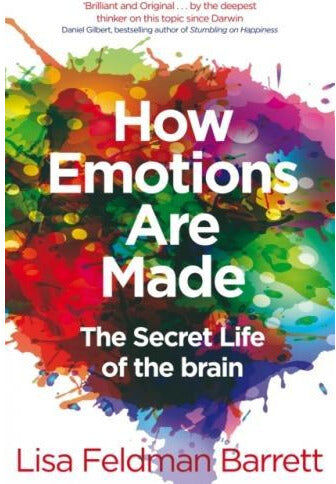
MACMILLAN How Emotions Are Made – The Secret Life of the Brain by Lisa Feldman Barrett Neuroscience & Psychology BestsellerDiscover a groundbreaking new understanding of the human mind with How Emotions Are Made: The Secret Life of the Brain by Lisa Feldman Barrett. Challenging long-held beliefs about how emotions work, neuroscientist Lisa Feldman Barrett presents a revolutionary theory explaining that emotions are not universal reactions, but are actively constructed by the brain. Drawing on cutting-edge research in psychology and neuroscience, the book reveals how the brain predicts, interprets, and shapes our emotional experiences. Written in an accessible and engaging style, this bestseller reshapes how we think about feelings, decision-making, mental health, and human behavior. It’s essential reading for anyone interested in psychology, neuroscience, self-understanding, and emotional intelligence. Why Readers Love This Book: Revolutionary insights into how emotions are created Based on modern neuroscience research Accessible explanations for general readers Practical implications for mental well-being Ideal for psychology and science enthusiasts A thought-provoking exploration of the brain, How Emotions Are Made changes how we understand what it means to feel.3,99 £*Shipping: 1,99 £Secure redirect to the provider
-
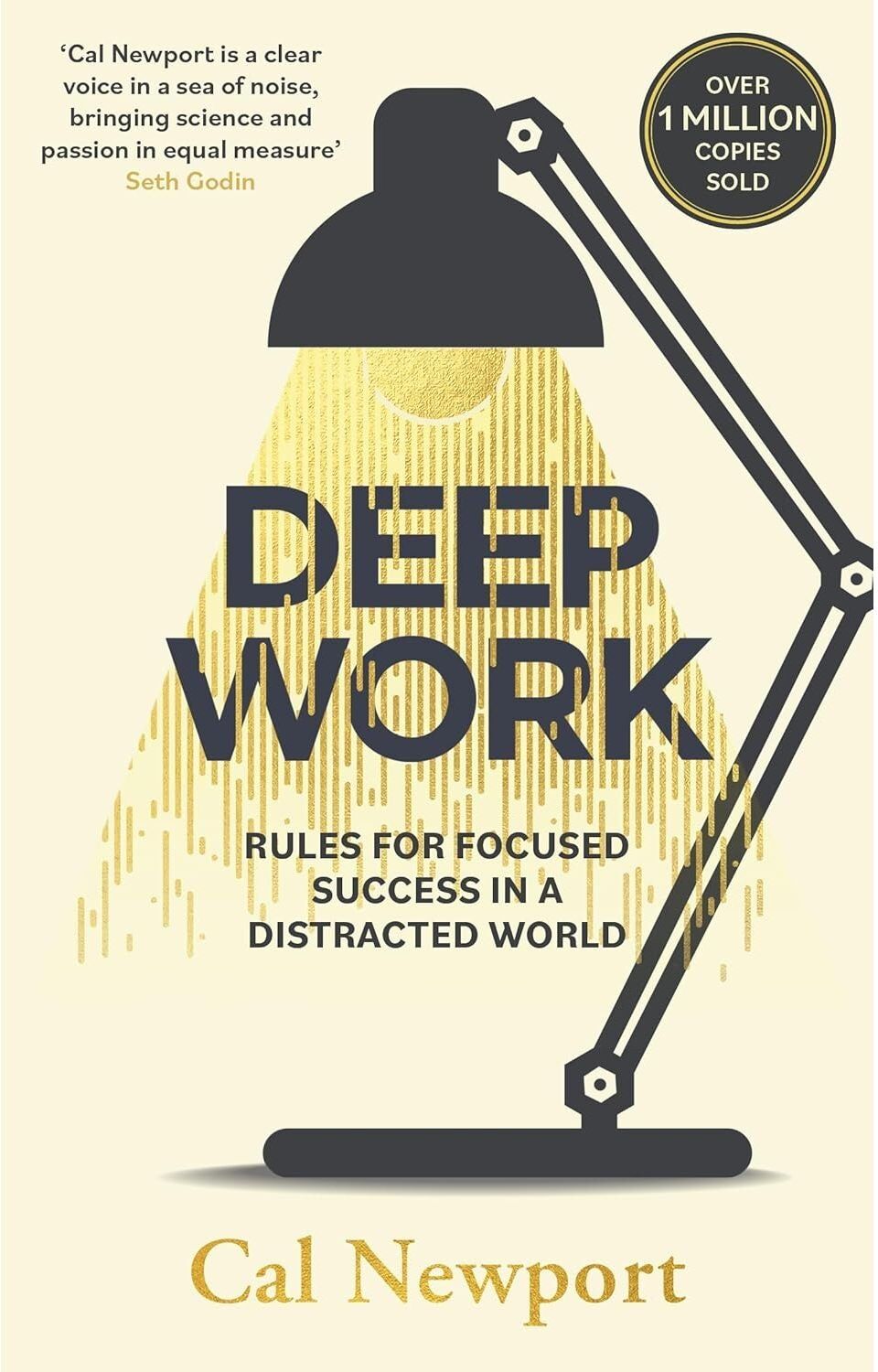
Piatkus Deep Work – Rules for Focused Success in a Distracted World by Cal Newport Productivity, Focus & Career Success BookIn a world full of distractions, the ability to focus deeply is becoming increasingly rare—and increasingly valuable. In Deep Work: Rules for Focused Success in a Distracted World, bestselling author and productivity expert Cal Newport explains why deep, concentrated work is the key to mastering complex skills, producing high-quality results, and standing out in your career. Drawing on neuroscience, psychology, and real-world examples, Newport shows how to eliminate distractions, train your focus, and work with intense concentration. The book combines compelling theory with practical strategies, helping readers build habits that support sustained attention and meaningful productivity in both professional and personal life. What You’ll Learn: Why deep work is essential for success in the modern economy How shallow work undermines productivity and focus Practical rules for building deep work habits Techniques to minimize distractions and digital overload How to produce better results in less time Perfect for professionals, students, creatives, and entrepreneurs, Deep Work is a must-read guide to achieving focus, efficiency, and long-term career success.7,99 £*Shipping: 2,99 £Secure redirect to the provider
-
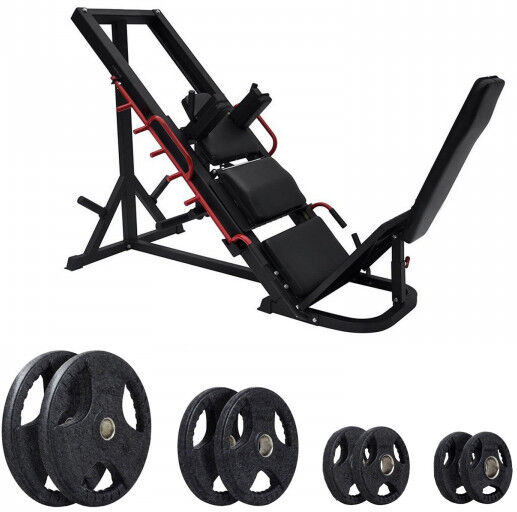
BodyMax CF800 Leg Press/Hack Squat Machine CF800 Leg Press/Hack Squat + 75kg...The BodyMax CF800 Leg Press / Hack Squat Machine brings two key lower-body lifts into a compact frame. The sled runs smoothly on the track, the adjustments are quick to sort out and the setup gives you a clear, reliable path for each rep. TWO LOWER-BODY MOVEMENTS The CF800 covers leg presses and...965,62 £*Shipping: 0,00 £Secure redirect to the provider
-
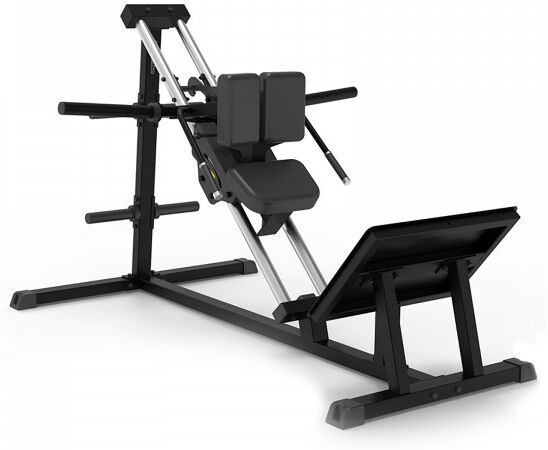
Taurus Pro Iso Hack SquatThe Taurus Pro Iso Hack Squat is built with the most demanding gyms in mind. From the commercial build quality to the easily accessible handles to keep users safe and stable, the Taurus Pro Iso Hack Squat is the perfect addition to any gym dedicated to providing its members with top-tier...899,10 £*Shipping: 0,00 £Secure redirect to the provider
-
What are organizational elements?
Organizational elements refer to the fundamental components that make up an organization's structure and functioning. These elements can include the organization's mission, vision, goals, policies, procedures, culture, leadership, communication channels, and decision-making processes. They are essential for creating a framework that guides the organization's operations and helps it achieve its objectives. By understanding and effectively managing these elements, organizations can improve their performance and adapt to changes in their environment. **
-
What is the organizational chart?
An organizational chart is a visual representation of the structure of an organization, showing the relationships and hierarchy between different positions and departments. It typically includes boxes representing different roles or positions, connected by lines to show the reporting relationships and lines of authority. Organizational charts are used to help employees understand the chain of command, communication channels, and reporting structure within the organization. They can also be used to identify areas of overlap or gaps in responsibilities. **
-
Which professions require organizational skills?
Many professions require organizational skills, including project management, event planning, administrative roles, and executive positions. In project management, organizational skills are essential for keeping track of timelines, resources, and team members. Event planners need strong organizational skills to coordinate all the details of an event, from vendors to schedules. Administrative roles require organizational skills to manage calendars, documents, and communication. Executive positions also require strong organizational skills to oversee multiple aspects of a business or organization. **
-
How can organizational levels be described?
Organizational levels can be described as the different layers or tiers within a company's structure, each with its own set of responsibilities and authority. These levels typically include top-level management, middle management, and front-line employees. Top-level management is responsible for making strategic decisions and setting the overall direction of the organization, while middle management oversees the implementation of these strategies and coordinates the activities of front-line employees. Front-line employees are responsible for carrying out the day-to-day tasks necessary to achieve the organization's goals. Each level has its own distinct role and contributes to the overall functioning of the organization. **

What is an ISO organizational standard?
An ISO organizational standard is a set of guidelines and best practices developed by the International Organization for Standardization (ISO) to help organizations improve their processes, products, and services. These standards are designed to ensure consistency, efficiency, and quality across various industries and sectors. By adhering to ISO standards, organizations can demonstrate their commitment to meeting customer requirements, complying with regulations, and continuously improving their operations. ISO standards cover a wide range of areas, including quality management, environmental management, information security, and occupational health and safety. **
What are the organizational levels in plants?
Plants have three main organizational levels: cells, tissues, and organs. Cells are the basic building blocks of plants and are organized into tissues, which are groups of cells that work together to perform specific functions. Organs are structures made up of different types of tissues that work together to carry out specific functions, such as leaves for photosynthesis or roots for absorption of water and nutrients. These levels of organization allow plants to efficiently carry out essential processes for growth and survival. **
Top-Angebote
Products related to Organizational:
-
Uplifted Goods 360 Rotating 6 Claw Organizational Accessory Hub rose GoldEstablish a high level of closet efficiency with this High Performance Vertical Space Optimization Interface. Engineered with a Reinforced Polymeric Structural Shield and a specialized sixprong claw frame, this hanger is designed to provide a...29,97 $*Shipping: 0,00 $Secure redirect to the provider
-
Modern Home Fixes Full Spectrum LED Floor Lamp For Eye Comfort, Focus & Indoor Productivity Full Spectrum LED Floor Lamp For Eye Comfort, Focus & Indoor ProductivityThis Full Spectrum LED Floor Lamp provides natural daylightstyle illumination that reduces eye strain, enhances focus, and improves clarity for reading, crafting, working, or indoor hobbies. It delivers balanced, flickerfree light indoors,...139,97 $*Shipping: 0,00 $Secure redirect to the provider
-
MACMILLAN How Emotions Are Made – The Secret Life of the Brain by Lisa Feldman Barrett Neuroscience & Psychology BestsellerDiscover a groundbreaking new understanding of the human mind with How Emotions Are Made: The Secret Life of the Brain by Lisa Feldman Barrett. Challenging long-held beliefs about how emotions work, neuroscientist Lisa Feldman Barrett presents a revolutionary theory explaining that emotions are not universal reactions, but are actively constructed by the brain. Drawing on cutting-edge research in psychology and neuroscience, the book reveals how the brain predicts, interprets, and shapes our emotional experiences. Written in an accessible and engaging style, this bestseller reshapes how we think about feelings, decision-making, mental health, and human behavior. It’s essential reading for anyone interested in psychology, neuroscience, self-understanding, and emotional intelligence. Why Readers Love This Book: Revolutionary insights into how emotions are created Based on modern neuroscience research Accessible explanations for general readers Practical implications for mental well-being Ideal for psychology and science enthusiasts A thought-provoking exploration of the brain, How Emotions Are Made changes how we understand what it means to feel.3,99 £*Shipping: 1,99 £Secure redirect to the provider
-
Piatkus Deep Work – Rules for Focused Success in a Distracted World by Cal Newport Productivity, Focus & Career Success BookIn a world full of distractions, the ability to focus deeply is becoming increasingly rare—and increasingly valuable. In Deep Work: Rules for Focused Success in a Distracted World, bestselling author and productivity expert Cal Newport explains why deep, concentrated work is the key to mastering complex skills, producing high-quality results, and standing out in your career. Drawing on neuroscience, psychology, and real-world examples, Newport shows how to eliminate distractions, train your focus, and work with intense concentration. The book combines compelling theory with practical strategies, helping readers build habits that support sustained attention and meaningful productivity in both professional and personal life. What You’ll Learn: Why deep work is essential for success in the modern economy How shallow work undermines productivity and focus Practical rules for building deep work habits Techniques to minimize distractions and digital overload How to produce better results in less time Perfect for professionals, students, creatives, and entrepreneurs, Deep Work is a must-read guide to achieving focus, efficiency, and long-term career success.7,99 £*Shipping: 2,99 £Secure redirect to the provider
-
What are organizational professions?
Organizational professions refer to careers that involve working within a structured environment, such as corporations, government agencies, or non-profit organizations. These professions typically require individuals to possess strong organizational skills, the ability to work well within a team, and a good understanding of how to navigate complex systems and hierarchies. Examples of organizational professions include management, human resources, finance, and administration. **
-
What are organizational tasks?
Organizational tasks are the specific activities and responsibilities that individuals or teams within an organization are responsible for completing in order to achieve the organization's goals. These tasks can include things like project management, scheduling, budgeting, coordinating team efforts, and ensuring that resources are allocated effectively. Organizational tasks are essential for maintaining order and efficiency within a company, and they help to ensure that everyone is working towards the same objectives. **
-
What are organizational elements?
Organizational elements refer to the fundamental components that make up an organization's structure and functioning. These elements can include the organization's mission, vision, goals, policies, procedures, culture, leadership, communication channels, and decision-making processes. They are essential for creating a framework that guides the organization's operations and helps it achieve its objectives. By understanding and effectively managing these elements, organizations can improve their performance and adapt to changes in their environment. **
-
What is the organizational chart?
An organizational chart is a visual representation of the structure of an organization, showing the relationships and hierarchy between different positions and departments. It typically includes boxes representing different roles or positions, connected by lines to show the reporting relationships and lines of authority. Organizational charts are used to help employees understand the chain of command, communication channels, and reporting structure within the organization. They can also be used to identify areas of overlap or gaps in responsibilities. **
Similar search terms for Organizational
-
BodyMax CF800 Leg Press/Hack Squat Machine CF800 Leg Press/Hack Squat + 75kg...The BodyMax CF800 Leg Press / Hack Squat Machine brings two key lower-body lifts into a compact frame. The sled runs smoothly on the track, the adjustments are quick to sort out and the setup gives you a clear, reliable path for each rep. TWO LOWER-BODY MOVEMENTS The CF800 covers leg presses and...965,62 £*Shipping: 0,00 £Secure redirect to the provider
-
Taurus Pro Iso Hack SquatThe Taurus Pro Iso Hack Squat is built with the most demanding gyms in mind. From the commercial build quality to the easily accessible handles to keep users safe and stable, the Taurus Pro Iso Hack Squat is the perfect addition to any gym dedicated to providing its members with top-tier...899,10 £*Shipping: 0,00 £Secure redirect to the provider
-
JoyToys Wooden Memory Game Montessori Color Matching Board For Kids Brain Training Toy Wooden Memory Game Montessori Color Matching Board For Kids Brain Training ToyCreate meaningful playtime while helping your child build confidence through fun, handson learning. This Wooden memory game combines colorful matching challenges with interactive gameplay to strengthen memory, focus, and problemsolving skills....29,97 $*Shipping: 0,00 $Secure redirect to the provider
-
Inspired Living High Difficulty IQ Lock Puzzle Wooden Brainteaser Classic Wooden Brain Teaser Puzzle For Focus & Problem Solving High Difficulty IQ Lock Puzzle Wooden Brainteaser Classic Wooden Brain Teaser Puzzle For Focus & Problem SolvingYou know that satisfying moment when everything clicks into place This classic wooden brainteaser is built for that feeling. Designed as a handson challenge for curious kids, teens, and adults, it turns quiet time into real skillbuilding. Each...23,97 $*Shipping: 0,00 $Secure redirect to the provider
-
Which professions require organizational skills?
Many professions require organizational skills, including project management, event planning, administrative roles, and executive positions. In project management, organizational skills are essential for keeping track of timelines, resources, and team members. Event planners need strong organizational skills to coordinate all the details of an event, from vendors to schedules. Administrative roles require organizational skills to manage calendars, documents, and communication. Executive positions also require strong organizational skills to oversee multiple aspects of a business or organization. **
-
How can organizational levels be described?
Organizational levels can be described as the different layers or tiers within a company's structure, each with its own set of responsibilities and authority. These levels typically include top-level management, middle management, and front-line employees. Top-level management is responsible for making strategic decisions and setting the overall direction of the organization, while middle management oversees the implementation of these strategies and coordinates the activities of front-line employees. Front-line employees are responsible for carrying out the day-to-day tasks necessary to achieve the organization's goals. Each level has its own distinct role and contributes to the overall functioning of the organization. **
-
What is an ISO organizational standard?
An ISO organizational standard is a set of guidelines and best practices developed by the International Organization for Standardization (ISO) to help organizations improve their processes, products, and services. These standards are designed to ensure consistency, efficiency, and quality across various industries and sectors. By adhering to ISO standards, organizations can demonstrate their commitment to meeting customer requirements, complying with regulations, and continuously improving their operations. ISO standards cover a wide range of areas, including quality management, environmental management, information security, and occupational health and safety. **
-
What are the organizational levels in plants?
Plants have three main organizational levels: cells, tissues, and organs. Cells are the basic building blocks of plants and are organized into tissues, which are groups of cells that work together to perform specific functions. Organs are structures made up of different types of tissues that work together to carry out specific functions, such as leaves for photosynthesis or roots for absorption of water and nutrients. These levels of organization allow plants to efficiently carry out essential processes for growth and survival. **
* All prices are inclusive of VAT and, if applicable, plus shipping costs. The offer information is based on the details provided by the respective shop and is updated through automated processes. Real-time updates do not occur, so deviations can occur in individual cases. ** Note: Parts of this content were created by AI.