Buy brain-hack.com ?
We are moving the project
brain-hack.com .
Are you interested in purchasing the domain
brain-hack.com ?
domain@kv-gmbh.de · 0541-91531010
Buy brain-hack.com ?
What particles can be created from virtual particles?
Virtual particles can create a variety of particles, including photons, electrons, positrons, and quarks. These virtual particles can briefly exist as fluctuations in the quantum vacuum and can interact with each other to produce real particles. The creation of particles from virtual particles is a fundamental process in quantum field theory and is responsible for many phenomena in particle physics. **
Does hydrogen emit alpha particles or do alpha particles emit hydrogen?
Hydrogen does not emit alpha particles. Alpha particles are emitted by the decay of certain radioactive materials, such as uranium or radium. These alpha particles are made up of two protons and two neutrons, and they are emitted as the radioactive material undergoes decay. On the other hand, hydrogen is a chemical element that consists of one proton and one electron, and it does not emit alpha particles. **


Similar search terms for Particles
Top-Angebote
Products related to Particles:
-
SUNEWMED+ Brightening Collagen Eye Patches collagen under eye patches with hydrolyzed collagen and gold particles 2 pcSUNEWMED+ Brightening Collagen Eye Patches, 2 pc, Eye Masks for Women, The eye area is a highly sensitive area, as the skin there is exceptionally thin and fragile, making it more susceptible to signs of fatigue and ageing. It therefore also requires special treatment with ingredients and consistencies designed exactly for its needs. The SUNEWMED+ Brightening Collagen Eye Patches eye mask is great alongside your favourite cream, whenever it feels as though your regular eye area routine needs a bit extra. The mask improves the quality of the skin around your eyes, restoring its vitality and a fresh, rested look. Characteristics: restores skin firmness and elasticity promotes collagen production removes signs of fatigue helps remove signs of skin ageing nourishes deeply Ingredients: collagen – binds a large amount of water, keeping skin hydrated for a long time, and thus promotes a youthful, full and elastic appearance of skin and a reduction in the visibility of wrinkles gold – has strong antioxidant effects, protects against harmful external influences, dryness and premature skin ageing, soothes, counteracts redness and helps towards a youthful, clear and radiant appearance allantoin – soothes, hydrates and softens, promotes regeneration How to use: Remove the eye patches from their packaging and place them on clean skin under the eyes. Allow to act for the time indicated on the packaging.3,70 £*Shipping: 3,99 £Secure redirect to the provider
-
Modern Home Fixes Full Spectrum LED Floor Lamp For Eye Comfort, Focus & Indoor Productivity Full Spectrum LED Floor Lamp For Eye Comfort, Focus & Indoor ProductivityThis Full Spectrum LED Floor Lamp provides natural daylightstyle illumination that reduces eye strain, enhances focus, and improves clarity for reading, crafting, working, or indoor hobbies. It delivers balanced, flickerfree light indoors,...139,97 $*Shipping: 0,00 $Secure redirect to the provider
-
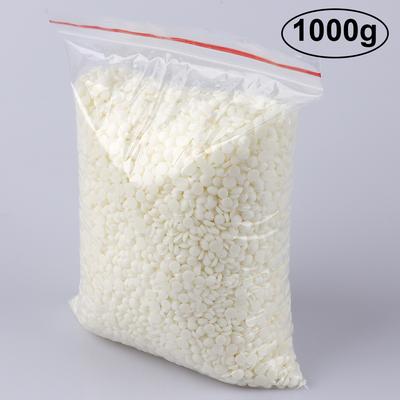
Quick Pick Pro Natural Soy Wax Granules, 1KG Candle Making Supplies, Scented Raw Material, 100% No Additives For DIY particles 1000gIgnite your creativity and fill your home with the pure, comforting glow of a candle you made yourself. Our 1KG bag of Natural Soy Wax Granular is the perfect foundation for your handmade masterpieces. As a premium candle raw material, it is...99,97 $*Shipping: 0,00 $Secure redirect to the provider
-
Inspired Finds Natural Soy Wax For Candle Making 1KG Pure Granular DIY Scented Candle Craft Material particles 17.64 Oz (1.10 Lb)Bring your candle ideas to life with premium soy wax for candle making, a natural and beginner friendly raw material designed for DIY candle creators. Made from plant based soybean oil, this wax offers a smooth texture and reliable melt that makes...104,99 $*Shipping: 0,00 $Secure redirect to the provider



-
Why do beta particles have more energy than alpha particles, when alpha particles get stuck in paper and beta particles can penetrate 5 mm of aluminum?
Beta particles have more energy than alpha particles because they are smaller and lighter, allowing them to travel at higher speeds. This higher speed results in beta particles having more kinetic energy compared to alpha particles. Despite their higher energy, beta particles can still be stopped by a thinner barrier like aluminum because of their smaller size and lower mass, which allows them to penetrate materials that would stop larger, heavier alpha particles. **
-
Why do beta particles have more energy than alpha particles, if alpha particles get stuck in paper and beta particles can penetrate 5 mm of aluminum?
Beta particles have more energy than alpha particles because they have a smaller mass and higher velocity. This allows them to penetrate materials more easily, such as aluminum, compared to alpha particles. Alpha particles, on the other hand, have a larger mass and lower velocity, causing them to interact more strongly with matter and get stuck in materials like paper. Therefore, the higher energy of beta particles enables them to penetrate materials more effectively than alpha particles. **
-
What are adverbial particles?
Adverbial particles are words that are used to modify verbs, adjectives, or other adverbs. They are often used to indicate direction, location, or manner. In English, adverbial particles are commonly used in phrasal verbs, where they are combined with a verb to create a new meaning. For example, in the phrasal verb "look up," the adverbial particle "up" modifies the meaning of the verb "look." **
-
Are smells real particles?
No, smells are not real particles. Smells are actually the result of the detection of certain molecules by our olfactory system. When certain molecules in the air come into contact with the receptors in our nose, they trigger a response that is interpreted by our brain as a specific smell. So, while smells are not particles themselves, they are the result of the interaction of molecules with our sensory system. **


What are water particles?
Water particles are the individual molecules of water, which are made up of two hydrogen atoms and one oxygen atom. These molecules are constantly moving and interacting with each other, forming the liquid state of water. At higher temperatures, the water molecules gain enough energy to break free from the liquid state and become water vapor, while at lower temperatures, they come together to form solid ice. Overall, water particles are the building blocks of water in its various states. **
Is heat particles or waves?
Heat is the transfer of energy from one object to another due to a difference in temperature. It is not a particle or a wave itself, but rather a form of energy that can be transferred through particles or waves. Heat can be transferred through conduction (particles), convection (particles), or radiation (waves). **
Top-Angebote
Products related to Particles:
-
Regency Fragrances Particles One 50ml UnisexModern, minimalist, and effortlessly refined, Regency Fragrances Particles One 50ml Unisex is a contemporary woody amber fragrance designed for those who appreciate subtle sophistication. Clean, versatile, and easy to wear, this distinctive scent combines fresh citrus, soft spices, and smooth woody notes to create an understated fragrance that feels uniquely personal. The fragrance opens with a bright blend of lime and pink pepper, delivering a crisp burst of citrus freshness balanced by a gentle touch of spice. Notes of benzoin, mastic, and delicate incense add depth and texture, creating a smooth and intriguing introduction. At the heart of the scent, Iso E Super creates a signature woody amber character. Airy, modern, and softly radiant, it delivers a clean warmth that blends naturally with the skin, giving the fragrance its distinctive yet subtle presence. As the scent develops, musk and woody notes form a refined base that lingers comfortably throughout the day. The result is a smooth, long-lasting finish that remains elegant and understated, making it ideal for everyday wear.15,00 £*Shipping: 3,50 £Secure redirect to the provider
-
Inspire Daily Merch DIY Educational Toy Gift For Kids Small Block Assembly Slide Particles DIY Educational Toy Gift For Kids Small Block Assembly Slide ParticlesEncourage Learning with a Fun DIY Educational Toy Looking for the perfect educational gift for your child The Children's Slide Small Block Assembly Particles DIY Educational Toy Gift is an engaging and creative toy that promotes learning while...39,97 $*Shipping: 0,00 $Secure redirect to the provider
-
SUNEWMED+ Brightening Collagen Eye Patches collagen under eye patches with hydrolyzed collagen and gold particles 2 pcSUNEWMED+ Brightening Collagen Eye Patches, 2 pc, Eye Masks for Women, The eye area is a highly sensitive area, as the skin there is exceptionally thin and fragile, making it more susceptible to signs of fatigue and ageing. It therefore also requires special treatment with ingredients and consistencies designed exactly for its needs. The SUNEWMED+ Brightening Collagen Eye Patches eye mask is great alongside your favourite cream, whenever it feels as though your regular eye area routine needs a bit extra. The mask improves the quality of the skin around your eyes, restoring its vitality and a fresh, rested look. Characteristics: restores skin firmness and elasticity promotes collagen production removes signs of fatigue helps remove signs of skin ageing nourishes deeply Ingredients: collagen – binds a large amount of water, keeping skin hydrated for a long time, and thus promotes a youthful, full and elastic appearance of skin and a reduction in the visibility of wrinkles gold – has strong antioxidant effects, protects against harmful external influences, dryness and premature skin ageing, soothes, counteracts redness and helps towards a youthful, clear and radiant appearance allantoin – soothes, hydrates and softens, promotes regeneration How to use: Remove the eye patches from their packaging and place them on clean skin under the eyes. Allow to act for the time indicated on the packaging.3,70 £*Shipping: 3,99 £Secure redirect to the provider
-
Modern Home Fixes Full Spectrum LED Floor Lamp For Eye Comfort, Focus & Indoor Productivity Full Spectrum LED Floor Lamp For Eye Comfort, Focus & Indoor ProductivityThis Full Spectrum LED Floor Lamp provides natural daylightstyle illumination that reduces eye strain, enhances focus, and improves clarity for reading, crafting, working, or indoor hobbies. It delivers balanced, flickerfree light indoors,...139,97 $*Shipping: 0,00 $Secure redirect to the provider
-
What particles can be created from virtual particles?
Virtual particles can create a variety of particles, including photons, electrons, positrons, and quarks. These virtual particles can briefly exist as fluctuations in the quantum vacuum and can interact with each other to produce real particles. The creation of particles from virtual particles is a fundamental process in quantum field theory and is responsible for many phenomena in particle physics. **
-
Does hydrogen emit alpha particles or do alpha particles emit hydrogen?
Hydrogen does not emit alpha particles. Alpha particles are emitted by the decay of certain radioactive materials, such as uranium or radium. These alpha particles are made up of two protons and two neutrons, and they are emitted as the radioactive material undergoes decay. On the other hand, hydrogen is a chemical element that consists of one proton and one electron, and it does not emit alpha particles. **
-
Why do beta particles have more energy than alpha particles, when alpha particles get stuck in paper and beta particles can penetrate 5 mm of aluminum?
Beta particles have more energy than alpha particles because they are smaller and lighter, allowing them to travel at higher speeds. This higher speed results in beta particles having more kinetic energy compared to alpha particles. Despite their higher energy, beta particles can still be stopped by a thinner barrier like aluminum because of their smaller size and lower mass, which allows them to penetrate materials that would stop larger, heavier alpha particles. **
-
Why do beta particles have more energy than alpha particles, if alpha particles get stuck in paper and beta particles can penetrate 5 mm of aluminum?
Beta particles have more energy than alpha particles because they have a smaller mass and higher velocity. This allows them to penetrate materials more easily, such as aluminum, compared to alpha particles. Alpha particles, on the other hand, have a larger mass and lower velocity, causing them to interact more strongly with matter and get stuck in materials like paper. Therefore, the higher energy of beta particles enables them to penetrate materials more effectively than alpha particles. **
Similar search terms for Particles
-
Quick Pick Pro Natural Soy Wax Granules, 1KG Candle Making Supplies, Scented Raw Material, 100% No Additives For DIY particles 1000gIgnite your creativity and fill your home with the pure, comforting glow of a candle you made yourself. Our 1KG bag of Natural Soy Wax Granular is the perfect foundation for your handmade masterpieces. As a premium candle raw material, it is...99,97 $*Shipping: 0,00 $Secure redirect to the provider
-
Inspired Finds Natural Soy Wax For Candle Making 1KG Pure Granular DIY Scented Candle Craft Material particles 17.64 Oz (1.10 Lb)Bring your candle ideas to life with premium soy wax for candle making, a natural and beginner friendly raw material designed for DIY candle creators. Made from plant based soybean oil, this wax offers a smooth texture and reliable melt that makes...104,99 $*Shipping: 0,00 $Secure redirect to the provider
-
MACMILLAN How Emotions Are Made – The Secret Life of the Brain by Lisa Feldman Barrett Neuroscience & Psychology BestsellerDiscover a groundbreaking new understanding of the human mind with How Emotions Are Made: The Secret Life of the Brain by Lisa Feldman Barrett. Challenging long-held beliefs about how emotions work, neuroscientist Lisa Feldman Barrett presents a revolutionary theory explaining that emotions are not universal reactions, but are actively constructed by the brain. Drawing on cutting-edge research in psychology and neuroscience, the book reveals how the brain predicts, interprets, and shapes our emotional experiences. Written in an accessible and engaging style, this bestseller reshapes how we think about feelings, decision-making, mental health, and human behavior. It’s essential reading for anyone interested in psychology, neuroscience, self-understanding, and emotional intelligence. Why Readers Love This Book: Revolutionary insights into how emotions are created Based on modern neuroscience research Accessible explanations for general readers Practical implications for mental well-being Ideal for psychology and science enthusiasts A thought-provoking exploration of the brain, How Emotions Are Made changes how we understand what it means to feel.3,99 £*Shipping: 1,99 £Secure redirect to the provider
-
Piatkus Deep Work – Rules for Focused Success in a Distracted World by Cal Newport Productivity, Focus & Career Success BookIn a world full of distractions, the ability to focus deeply is becoming increasingly rare—and increasingly valuable. In Deep Work: Rules for Focused Success in a Distracted World, bestselling author and productivity expert Cal Newport explains why deep, concentrated work is the key to mastering complex skills, producing high-quality results, and standing out in your career. Drawing on neuroscience, psychology, and real-world examples, Newport shows how to eliminate distractions, train your focus, and work with intense concentration. The book combines compelling theory with practical strategies, helping readers build habits that support sustained attention and meaningful productivity in both professional and personal life. What You’ll Learn: Why deep work is essential for success in the modern economy How shallow work undermines productivity and focus Practical rules for building deep work habits Techniques to minimize distractions and digital overload How to produce better results in less time Perfect for professionals, students, creatives, and entrepreneurs, Deep Work is a must-read guide to achieving focus, efficiency, and long-term career success.7,99 £*Shipping: 2,99 £Secure redirect to the provider
-
What are adverbial particles?
Adverbial particles are words that are used to modify verbs, adjectives, or other adverbs. They are often used to indicate direction, location, or manner. In English, adverbial particles are commonly used in phrasal verbs, where they are combined with a verb to create a new meaning. For example, in the phrasal verb "look up," the adverbial particle "up" modifies the meaning of the verb "look." **
-
Are smells real particles?
No, smells are not real particles. Smells are actually the result of the detection of certain molecules by our olfactory system. When certain molecules in the air come into contact with the receptors in our nose, they trigger a response that is interpreted by our brain as a specific smell. So, while smells are not particles themselves, they are the result of the interaction of molecules with our sensory system. **
-
What are water particles?
Water particles are the individual molecules of water, which are made up of two hydrogen atoms and one oxygen atom. These molecules are constantly moving and interacting with each other, forming the liquid state of water. At higher temperatures, the water molecules gain enough energy to break free from the liquid state and become water vapor, while at lower temperatures, they come together to form solid ice. Overall, water particles are the building blocks of water in its various states. **
-
Is heat particles or waves?
Heat is the transfer of energy from one object to another due to a difference in temperature. It is not a particle or a wave itself, but rather a form of energy that can be transferred through particles or waves. Heat can be transferred through conduction (particles), convection (particles), or radiation (waves). **
* All prices are inclusive of VAT and, if applicable, plus shipping costs. The offer information is based on the details provided by the respective shop and is updated through automated processes. Real-time updates do not occur, so deviations can occur in individual cases. ** Note: Parts of this content were created by AI.